

Property damage on construction sites and commercial properties can result from accidents, weather, equipment failures, and human error, leading to costly repairs, project delays, and business disruptions. A forced door, a keyed vehicle line, or a collapsed section of fencing after a storm can each stall a project or a storefront for days. Property damage prevention has to cover more ground than vandalism alone, because the sources of loss range from intentional acts to weather and equipment misuse.
We build mobile surveillance trailer systems specifically because static fencing and after-the-fact photos do not stop a loss in progress. This guide breaks down what counts as property damage, what it actually costs beyond the repair bill, and the layered prevention approach we recommend to construction, retail, and industrial site managers.
Property damage is any physical harm to structures, vehicles, equipment, or fixtures caused by people, weather, or misuse rather than normal wear. On a job site or commercial property, it shows up as broken windows, damaged fencing, vandalized equipment, or vehicle collisions in a parking lot. Most owners lump it in with vandalism, but the two are not the same thing for insurance or prevention purposes.
A few things matter more than they first appear:
- Property damage claims often get denied or delayed when there is no time-stamped record of when and how the damage occurred.
- Insurance carriers treat intentional damage differently from accidental or weather-related damage, which changes what a policy actually pays out.
- A single forced-entry incident can damage doors, gates, and fencing worth more than whatever was taken inside.
- Sites with active real-time monitoring tend to settle claims faster because documentation exists from the moment of the incident, not after.
- Unmanned properties are particularly vulnerable because there may be no employee available to respond when an incident begins. A dedicated after-hours security strategy helps maintain coverage when a site is closed and reduces the gap between an incident occurring and someone responding to it.
What Counts as Property Damage on a Commercial or Construction Site

Property damage on a commercial or construction site covers any physical harm to buildings, fencing, vehicles, equipment, or fixtures that goes beyond ordinary wear and tear. It includes intentional acts like graffiti and vandalism, but also accidental damage from vehicle collisions, forced-entry break-ins, equipment misuse, and severe weather. Most site managers only plan for the first category and get caught off guard by the rest.
Vandalism, specifically deliberate defacement or destruction, is its own well-documented risk with its own prevention framework. We cover that in depth in our vandalism prevention guide, so this piece treats vandalism as one input into a bigger property damage picture rather than re-explaining it. A perimeter breach, an intrusion zone violation, or a line crossing detected by a camera system can each precede damage that has nothing to do with malicious intent, which is why a broader lens matters.
Property damage also differs by site type. A construction site faces exposed equipment, incomplete fencing, and vacant structures. A retail parking lot faces vehicle-on-vehicle incidents and loading-dock traffic. An automotive dealership lot combines both risks across a dense inventory of vehicles sitting outside overnight.
The True Cost of Property Damage
The true cost of property damage on a job site goes well past the repair invoice. Direct repair is only the first line item. Insurance premiums often rise after a claim, project schedules slip while damaged access points get fixed, and liability exposure grows if a trespasser gets hurt on a damaged or unsecured site.
| Cost Category | What It Includes |
| Direct repair | Materials, labor, and rental replacement for damaged structures, fencing, or equipment |
| Insurance impact | Premium increases after a claim, higher deductibles, and coverage review at renewal |
| Project delay | Lost schedule days while damaged access points, fencing, or equipment get repaired |
| Liability exposure | Legal costs if a trespasser or third party is injured on a damaged or unsecured site |
| Reputational cost | Client or tenant confidence when repeated incidents make a property look unmanaged |
Property Damage Prevention Starts Before the First Incident
Most sites only build a property damage prevention plan after the first claim. That reactive pattern is expensive, because insurers and courts weigh a documented history of proactive prevention differently than a single after-the-fact repair. A site with visible deterrence, real-time detection, and consistent documentation builds a record that supports faster claims and stronger liability defense long before anything happens.
Common Causes of Property Damage on Job Sites and Commercial Properties
Property damage on commercial and construction sites comes from five recurring sources, and only one of them is intentional. Knowing which cause is driving a site’s exposure changes which prevention tools actually help.
Vandalism and graffiti. Deliberate defacement or destruction can damage buildings, equipment, fencing, signage, and other property. Businesses looking to reduce this type of exposure can learn more in our vandalism prevention guide and our construction site vandalism guide.
Vehicle collisions and parking lot incidents. Fender-benders, hit-and-runs, and loading-dock mishaps account for a significant share of damage on retail properties, dealerships, and other commercial sites. Strategic camera placement can help document incidents and identify problem areas. Our guide to parking lot surveillance and parking lot security covers how monitoring can improve visibility across busy lots and driveways.
Break-ins and forced entry. Theft and unauthorized access remain persistent concerns for construction sites and commercial properties. A 2026 report found 2,639 confirmed break-ins across active U.S. construction sites in 2025, a 50% increase from 2024. Forced entry can also damage gates, containers, doors, and fencing, sometimes creating repair costs that exceed the value of the stolen property. Our construction site theft guide and how to secure a construction site cover this angle directly.
Equipment misuse or unauthorized operation. An unqualified operator running machinery, or equipment left running unattended, causes damage that insurance often treats differently than theft or vandalism.
Weather and environmental exposure. Wind, hail, and flooding damage fencing, signage, and exposed materials. This cause is rarely preventable outright, but early detection through remote site monitoring shortens the window before secondary damage, like an open perimeter after storm damage, turns into a bigger loss.
Why Vandalism and Property Damage Aren’t the Same Insurance Conversation
Vandalism is one cause of property damage, not a synonym for it, and treating the two as interchangeable costs owners money at claim time. Many commercial policies define vandalism narrowly as malicious, intentional destruction, while broader property damage coverage, exclusions, and deductibles can differ for weather, accidental, or theft-related damage.
This distinction matters most in the first hours after an incident. A site manager who correctly identifies whether damage came from a forced-entry break-in, a vehicle collision, or intentional vandalism, and who can back that up with time-stamped video, gives an adjuster a much cleaner claim to process. Requirements and coverage language vary by policy and by state, so we recommend confirming specifics with an insurance provider or attorney rather than assuming any single classification. For the vandalism-specific playbook, our vandalism prevention guide goes deeper into environmental design and signage tactics.
A Practical Checklist to Prevent Property Damage
Preventing property damage starts with layered coverage, not a single tool. No one deterrent stops every cause of loss, so we recommend stacking the following layers based on site type and exposure.
Perimeter security and access control. Fencing, gates, and controlled entry points reduce forced-entry opportunities and limit which vehicles and people reach a vulnerable area. Pair physical barriers with an AI intrusion zone around restricted equipment or material storage.
Real-Time AI Detection and Instant Alerts
A camera that only records shows what happened after the damage is done. Real-time behavioral analytics flag a perimeter breach or an intrusion zone violation as it happens, then push an instant notification to a live operator or site manager. That gap, seconds instead of hours, is what separates deterrence from documentation.
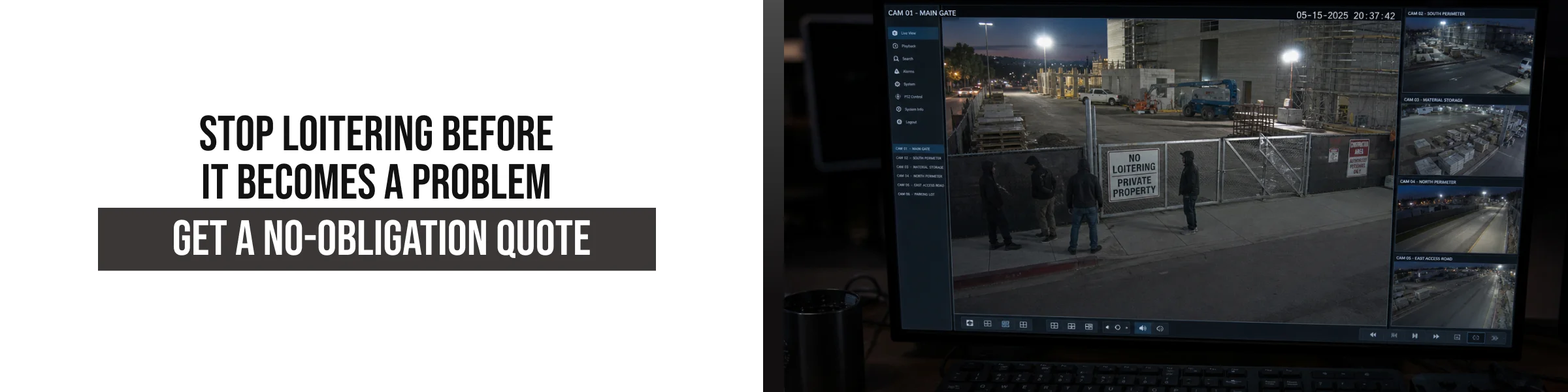
Audio and visual deterrents. A voice-down warning delivered through an IP bullhorn speaker, combined with a strobe light, interrupts loitering or tampering before it escalates into damage. Most incidents end the moment a visible camera and an audible warning make clear someone is watching in real time.
Time-stamped documentation for insurance and legal claims. Chain-of-custody metadata and tamper-detected footage give an adjuster or attorney something concrete to work with. Our case reporting solution turns raw footage into a shareable, time-stamped report built for exactly this purpose.
24/7 remote monitoring for after-hours and unmanned sites. Autonomous patrol patterns like Sentry Mode keep PTZ cameras rotating and scanning when no one is on-site, which is precisely when unmanned exposure runs highest.
What Insurers and Courts Actually Want When You File a Claim
Insurers and courts want time-stamped, tamper-resistant documentation of an incident, not a description written after the fact. The same discipline applies elsewhere in commercial operations. The Occupational Safety and Health Administration requires many employers to keep detailed records of workplace incidents, and its recordkeeping framework exists specifically to identify patterns and support hazard correction over time. Property damage documentation works the same way. A single photo taken the next morning carries far less weight than a continuous video record with a verifiable timestamp and an unbroken chain of custody.
Practical documentation habits that hold up: capture footage automatically rather than relying on someone remembering to hit record, retain an audit trail that shows the footage has not been edited, and log the exact time an alert fired versus when someone responded. None of this replaces legal advice specific to a jurisdiction or policy, and requirements for evidence handling can vary by state, so confirming details with counsel or an insurance provider is still worth doing before relying on any one approach.
How Mobile Surveillance Trailers Reduce Property Damage Claims

Mobile surveillance trailer deployment reduces property damage claims by giving a site continuous, verifiable coverage instead of a gap between patrol rounds. Each unit runs on solar power with an onboard battery system, so there is no trenching, no wiring, and no dependency on site power that could itself fail during a storm.
| Specification | Verified Value |
| Base footprint | 5 feet by 5 feet |
| Mast height | 20-foot telescoping mast |
| Camera configuration | 4-camera or 6-camera configurations, 360-degree PTZ, 25x optical zoom |
| PTZ cameras | Two 360-degree PTZ cameras, 25x optical zoom |
| Coverage area | Typically 2 to 3 acres, depending on layout and sightlines |
| Deployment time | Under one hour, often operational the same day |
| Connectivity | Onboard cellular modem with multi-SIM connectivity to ensure uptime; Starlink available as an upgrade |
Mallard Tower vs. Canvas Back Tower for Extended Deployments
The Mallard Tower is our standard configuration and covers most sites with reliable sun exposure. The Canvas Back Tower adds a methanol backup generator on top of the same base configuration, which matters on sites with heavy tree cover, extended cloudy stretches, or winter deployments where solar alone may not keep pace with demand. Choosing the right configuration is itself a property damage prevention decision, since a unit that loses power during a storm or a break-in attempt stops documenting exactly when documentation matters most.
Not every site needs a mobile trailer. Parking lots and other semi-permanent locations with existing light poles and 110V power are often better served by our pole-mounted camera systems, which have a smaller footprint and suit longer-term placements. The published comparison below reflects our own pricing page, and final cost always depends on monitoring, connectivity, backup power, delivery, and lease length. Every Duck View system falls within one $1,000 to $3,000 monthly range, and monitoring is an optional add-on that moves a unit toward the upper end.
| Mobile Surveillance Tower | Pole-Mounted System | |
| Typical monthly range | $1,500 to $3,000 per unit | $1,000 to $1,500 per unit |
| Requires external power | No, solar-powered | Yes, 110V required |
| Ideal deployment | Construction sites, events, remote or temporary locations | Parking lots, light poles, semi-permanent installations |
We manufacture and support every unit in Kaysville, Utah, which the FAQ on our site cites as the reason for fast lead times, and every unit deploys in under an hour once it arrives on-site. Nate Salazar, Senior Director of Asset Protection & Safety at Sportsman’s Warehouse, has described Duck View Systems as exceptionally professional and reliable, with AI expertise he calls industry-leading, and a trusted partner for his organization’s asset protection strategy. That kind of outcome depends on units that actually stay powered and connected through the exact conditions that cause property damage in the first place.
For sites with layout risk beyond what a single unit covers, our construction site protection resource walks through placement and multi-unit planning for larger or irregular properties, and our construction sites page covers the full range of risks a job site faces beyond property damage alone.
Frequently Asked Questions About Property Damage Prevention
Does insurance cover vandalism and property damage the same way?
Not always. Many commercial policies define vandalism as intentional, malicious destruction, while broader property damage coverage can carry different exclusions and deductibles for weather, accidental, or theft-related damage. Coverage language varies by policy and by state, so confirming specifics with an insurance provider is the safest step before assuming any claim is covered.
How do I document property damage for an insurance claim?
Capture time-stamped video or photos as close to the moment of the incident as possible, preserve an unedited chain of custody, and log when detection and response occurred. A continuous video record from a monitored site typically carries more weight with an adjuster than a single photo taken after the fact.
Who is liable for damage on a job site?
Liability depends on the cause of the damage, the site’s ownership and lease structure, and local law, and it is genuinely different case by case. A general contractor, a property owner, and a tenant can each carry different exposure depending on the incident. This is not a substitute for legal advice specific to a jurisdiction or contract.
Can AI cameras really prevent property damage, or do they just record it?
Behavioral analytics that flag loitering, a perimeter breach, or an intrusion zone violation in real time, paired with an audio talk-down or a strobe light, interrupt many incidents before damage occurs. A camera that only records shows what happened after the fact and does nothing to stop it in the moment.
What’s the difference between property damage and criminal mischief?
Criminal mischief is typically a legal term for intentional damage to property without the owner’s consent, which overlaps heavily with vandalism. Property damage is the broader outcome and includes accidental, weather-related, and equipment-related causes that may not meet the legal bar for a criminal mischief charge. Definitions and thresholds vary by state.
Property Damage Prevention Works Best as a System, Not a Single Camera
Property damage prevention on a job site or commercial property never comes down to one tool. It takes layered perimeter control, real-time detection, audio and visual deterrence, and documentation that actually holds up with an insurer or in court. We built our mobile and pole-mounted systems around that layered approach because a single fixed camera cannot cover every cause of loss we’ve outlined here, from forced entry to weather exposure to simple equipment misuse. If a property or job site has gaps in any of those layers, our team can walk through site-specific coverage, connectivity, and monitoring options and build a custom monitoring plan around the actual risks a site faces.
Request a quote from us for a free consultation, and we’ll help map out the right prevention layers before the next incident, not after it.