

How to Prevent and Handle Robberies and Theft in Retail: Why It Demands Your Immediate Attention
How to prevent and handle robberies and theft in retail starts with understanding that this isn’t just about lost merchandise, it’s about protecting your livelihood, employees, and customers. The financial and emotional stability of your business is on the line every single day.
According to a Forbes Advisor survey, a staggering 90% of small business retailers in the United States have experienced theft, with 75% reporting monthly losses between $500 and $2,500. These aren’t just statistics; they represent real businesses struggling to cover payroll, pay rent, and stay afloat in a challenging economic climate.
Quick Answer: Essential Steps On How to Prevent and Handle Robberies and Theft in Retail
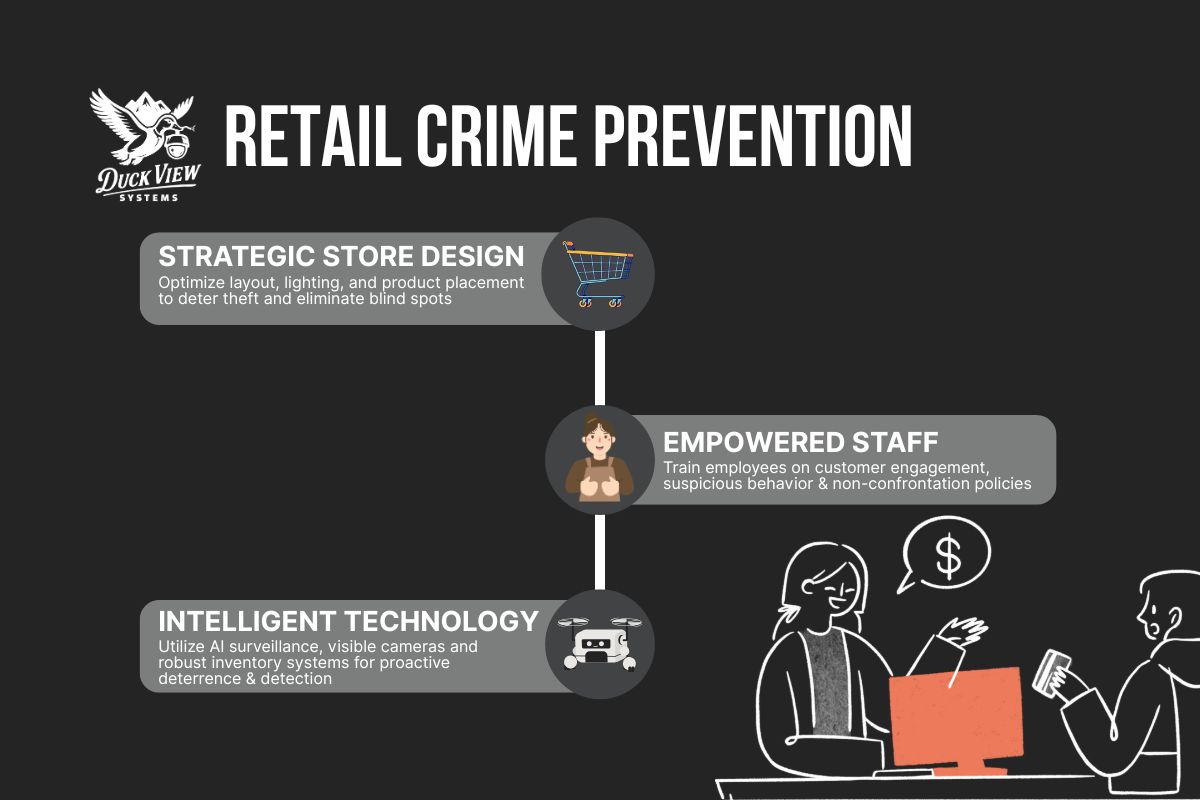
- Optimize your store layout with clear sightlines, bright lighting, and strategic product placement to eliminate blind spots.
- Train your staff on proactive customer engagement, recognizing suspicious behavior without profiling, and strict non-confrontation policies.
- Implement layered security technology like AI-powered surveillance, visible cameras, and access control for sensitive areas.
- Establish clear cash handling procedures with minimal register amounts, regular bank drops, and time-lock safes.
- During an incident, prioritize safety above all else. Cooperate, remain calm, and never resist.
- After an incident, secure the scene, call 911 immediately, and provide clear, high-resolution footage to law enforcement.
- Support your team with access to counseling, open communication, and conduct thorough post-incident reviews to improve security protocols.
The financial impact is immense. Retail shrink, the industry term for losses from theft, fraud, and errors, cost US retailers $112.1 billion in 2022, according to the latest National Retail Federation (NRF) report. This represents a significant 19% increase from the previous year, demonstrating a rapidly escalating problem. But the human cost is equally devastating. The rise in aggressive and violent incidents leads to employee trauma, chronic stress, and a pervasive sense of fear that can cripple morale and lead to high turnover.
Threats come from multiple directions: external theft from opportunistic shoplifters and sophisticated organized retail crime (ORC) syndicates, internal theft by employees, and costly operational errors. A comprehensive security strategy is not a luxury; it’s a necessity. This requires a multi-layered approach that combines smart store design, a well-trained staff, and intelligent, modern technology.
Modern security has evolved far beyond passive recording. Today’s solutions are active, AI-driven systems that can detect suspicious behavior and alert you before a crime occurs. These technologies, when integrated with proper training and procedures, create formidable layers of protection that make your business a hard target for criminals.
Our Duck View Systems team specializes in AI-powered mobile surveillance units tailored for exterior retail protection (parking lots, storefronts, loading docks). We believe that effective loss prevention in these zones requires proactive detection, deterrence, and real-time alerts to safeguard your assets, people, and peace of mind.
Understanding the Threat: Common Types and Impacts of Retail Crime
To effectively address how to prevent and handle robberies and theft in retail, you must first understand the multiple threats you face. The National Retail Federation’s latest research shows that retail shrink hit $112.1 billion in losses in 2022 for US retailers, a sharp increase that highlights the growing boldness of criminals. Understanding where these losses originate is the foundation of building an effective defense for your store. For more background, visit our guide on How to Prevent Retail Theft.
External Theft: From Shoplifting to Organized Retail Crime
External theft is the most visible threat, ranging from casual, opportunistic amateurs to professional criminal enterprises. Shoplifting remains a primary driver, accounting for approximately 38% of all retail losses. Common tactics include concealing items in bags or clothing (concealment), switching price tags to pay less, committing return fraud with stolen or used items, and simply grabbing merchandise and running. The proliferation of self-checkout stations has also created new vulnerabilities, enabling checkout fraud where items are intentionally not scanned or misidentified.
A far more dangerous and costly threat is Organized Retail Crime (ORC). These are not individual shoplifters; they are sophisticated criminal syndicates that steal large quantities of goods as a business. They are responsible for billions in annual losses and often resell stolen goods through online marketplaces. To combat this, Congress passed the Inform Act in 2023 to increase the transparency of online sellers, but ORC continues to evolve. These groups are increasingly aggressive, and their operations often involve violence or the threat of violence, making them a significant safety concern.
Robbery represents the most acute external threat, as it is defined by the use or threat of force. These terrifying incidents carry the highest risk of physical harm and profound psychological trauma for everyone involved. Therefore, mitigating the risk of violent crime must be a critical priority in your security planning.
Internal Theft: The Threat from Within
While external threats often grab headlines, internal (employee) theft is a silent drain on profitability, accounting for roughly 29% of all retail shrink. Research suggests a high percentage of employees have stolen from an employer at some point, contributing to tens of billions in annual losses for US businesses. This betrayal of trust can be uniquely damaging to a business.
Employee theft manifests in various ways: directly skimming cash from the register, “sweethearting” (giving friends and family unauthorized discounts or free items), processing fraudulent returns for cash, stealing inventory directly from the stockroom or sales floor, and even stealing sensitive company data. This insider threat not only hits your bottom line but also erodes team morale and creates a culture of suspicion.
The Staggering Financial and Psychological Costs
The consequences of retail crime extend far beyond the value of stolen goods. Financially, the losses can be devastating, particularly for small and medium-sized businesses operating on thin margins. A Forbes Advisor survey found that 75% of small retailers lose between $500 and $2,500 every month to theft. These are funds that could have been used for growth, marketing, or employee wages. Even major corporations are not immune; Target cited a projected loss increase of over $500 million in a single year due to shrink, leading to the difficult decision to close stores in high-theft areas.
The human cost is even deeper and more difficult to quantify. Employees who experience or witness a robbery or a violent theft incident can suffer from lasting trauma, anxiety, and post-traumatic stress. This leads to higher employee turnover, increased absenteeism, and a pervasive sense of insecurity that can poison a workplace. Protecting your people is always the top priority, more important than any piece of merchandise or dollar in the cash register. Providing support, such as access to employee assistance programs and counseling, is a critical component of post-incident response and maintaining a healthy, resilient workforce.
Proactive Prevention: How to Fortify Your Retail Store
The most effective way to approach how to prevent and handle robberies and theft in retail is to build a strong, layered defense before an attack ever occurs. A well-secured store feels open and welcoming to legitimate customers but signals to potential thieves that you are a vigilant and difficult target. This layered approach, often called “defense in depth,” combines physical deterrents, smart procedures, and modern technology to create multiple barriers to crime.
Strategic Store Layout and Environmental Design
Your store’s physical layout is your first and most constant security feature. This concept, known as Crime Prevention Through Environmental Design (CPTED), uses the environment to discourage criminal behavior. Clear sightlines are fundamental; keep shelving low (under 60 inches) and aisles wide and uncluttered to eliminate blind spots where merchandise can be concealed.
Use convex and dome mirrors strategically to give staff visibility around corners and behind tall displays. Bright, uniform lighting, both inside and outside your store, is a powerful and cost-effective deterrent. Criminals prefer to operate in shadows and poorly lit areas, so pay special attention to entrances, exits, back alleys, and parking lots. Our Parking Lot Security solutions are designed to extend this principle to your property’s exterior.
Strategic merchandise placement is also key. Place high-value, easily stolen items (like electronics, cosmetics, or designer accessories) in locked display cases, behind the service counter, or in areas with heavy staff traffic. Keep small, desirable “grab-and-run” items away from exits. Position your checkout area and welcome desk near the main entrance to create a natural point of observation, allowing staff to monitor everyone who enters and leaves.
Building Your Human Firewall: Employee Training and Awareness
Your employees are your most valuable and dynamic security asset. The single most effective theft deterrent is excellent, proactive customer service. Train your staff to greet every person who enters the store. This simple act makes honest customers feel welcome and signals to potential thieves that they have been seen and are being watched.
Staff should be trained to identify suspicious behaviors without profiling. These behaviors include individuals who avoid staff contact, repeatedly scan the ceiling for cameras, wander aimlessly without interest in merchandise, or work in groups to create distractions.
Crucially, you must implement and enforce a clear non-confrontation policy. Employees must understand that they should never physically confront, chase, or attempt to detain a suspected thief. Their safety is always the paramount concern. Confrontations can quickly escalate to violence and expose your business to significant legal liability.
In many US jurisdictions, it may also be illegal for employees to detain suspects. Instead, train them to be excellent witnesses: observe and mentally record details like height, clothing, distinguishing features, and direction of travel. Use role-playing scenarios during training to build their confidence in handling these tense situations calmly and safely.
Best Practices for Cash and Inventory Management
Robust cash and inventory controls are essential for removing the opportunities for both internal and external theft. For cash handling, keep only the minimum necessary amount of cash in registers. Use a drop safe or a time-lock safe for storing larger bills and excess cash throughout the day. Vary the times and routes for your bank deposits to avoid creating a predictable pattern that robbers could exploit.
For inventory control, regular audits and cycle counting are non-negotiable. Cycle counting, as detailed in guides like Shopify’s, involves counting small, targeted sections of your inventory on a frequent, rotating basis. This allows you to spot discrepancies and potential theft much earlier than a single annual inventory count.
Implement strict procedures for fitting rooms, such as limiting the number of items a customer can take in and having staff check the items on the way in and out. Finally, secure your backrooms and stockrooms. Restrict access to authorized personnel only, and keep these areas clean and organized to make it harder for items to disappear unnoticed.
Leveraging Technology for AI-Driven Prevention and Response
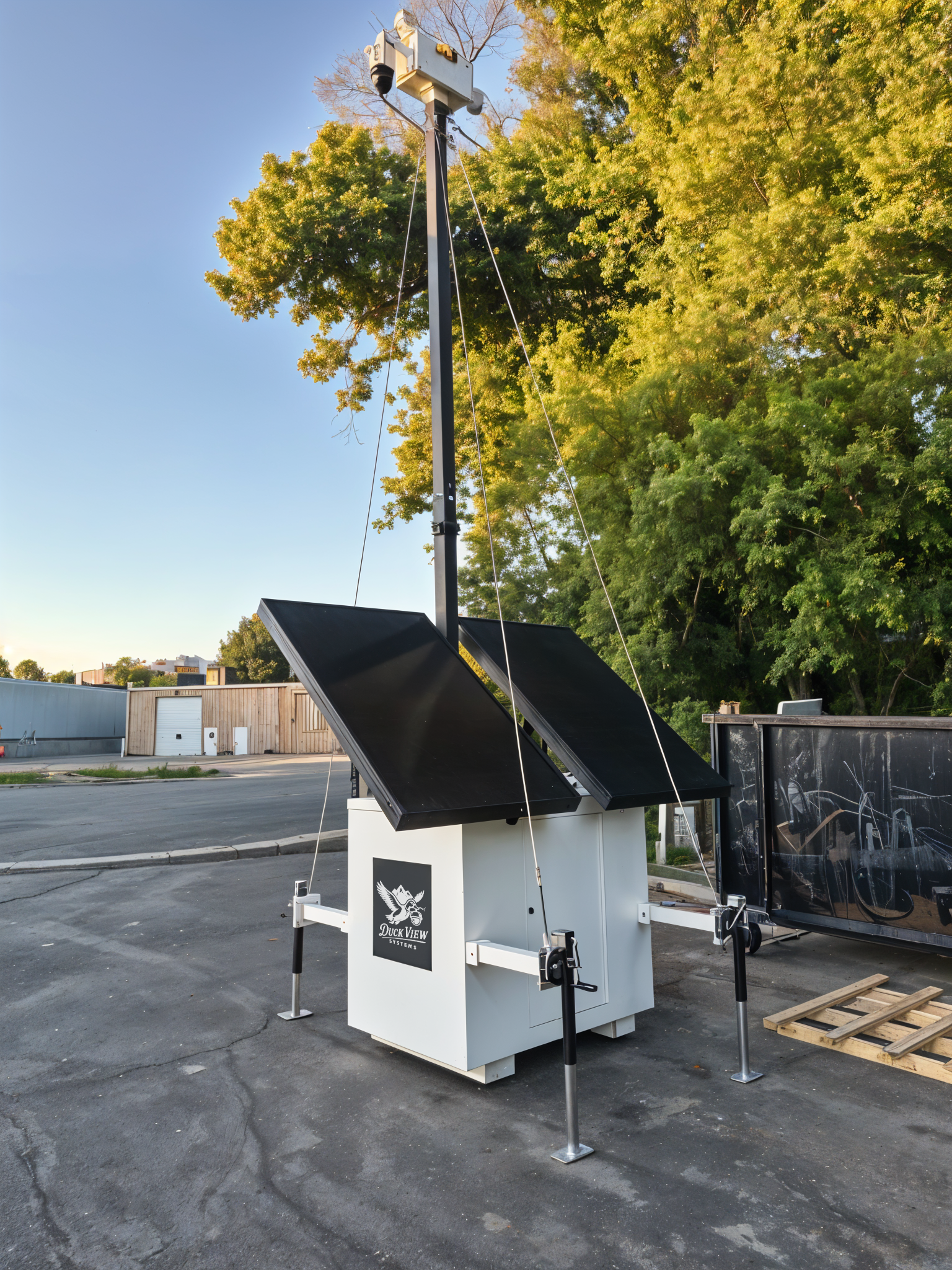
In modern retail, relying solely on traditional passive surveillance is insufficient. Technology is now a fundamental pillar in how to prevent and handle robberies and theft in retail, especially for exterior zones. The shift is from reactive monitoring to proactive AI Crime Prevention. Duck View’s mobile surveillance systems are engineered to detect suspicious activity in real time, particularly in parking lots, storefront exteriors, and loading zones, allowing you to intervene and deter crime before it escalates.
The Role of Visible Security and Modern Surveillance
Visible security measures are your first technological deterrent. Simple but effective deterrent signage (“24/7 Video Surveillance in Use”) warns potential criminals that they are being watched and that evidence of their actions will be captured. While traditional CCTV cameras are passive, modern high-definition Business Security Cameras offer far more utility.
Our powerful zoom-capable cameras capture crystal-clear, evidentiary-quality images, ensuring that crucial details like license plates and facial features are identifiable, not just blurry shapes. Furthermore, our Real Time Monitoring platform allows you to receive immediate alerts and access live video feeds from any device, anywhere. This empowers you to have eyes on your property even when you’re not physically there, enabling a rapid and informed response.
How to prevent and handle robberies and theft in retail with AI
This is the future of retail security, and it’s available today. Our AI-powered solutions transform your surveillance system from a passive recording device into an active, intelligent defense system. Our AI Surveillance Monitoring is the core of our philosophy of AI Driven Prevention Not Just Recording. The AI software analyzes video streams in real-time, 24/7, looking for predefined suspicious activities that often precede a crime.
At its heart is our advanced AI Human Detection, which intelligently tracks human movement while filtering out irrelevant motion from animals, weather, or passing traffic. This dramatically reduces false alarms and focuses your attention on what matters. This technology is crucial for spotting threats like individuals loitering near a closed entrance after hours, or unusual group formations in a parking lot that often signal a pending ORC event.
Our Virtual Guard service leverages this AI to monitor your property around the clock. When the AI detects a credible threat, our trained monitoring team can be notified to verify the event and alert law enforcement in real-time. We also offer an AI Inspector tool to help you remotely verify operational compliance, such as checking if doors are closed on time, adding another powerful layer of loss prevention.
Using Data to Uncover Theft Patterns and Streamline Investigations
The data generated by an intelligent surveillance system is a goldmine for long-term risk reduction. By analyzing incident data, you can identify recurring external risk patterns such as peak hours for lot break-ins, common entry points, or areas prone to loitering. You can allocate security resources more effectively, optimize camera placement, and refine deterrent strategies.
Manually scrubbing through hours of footage to find a 10-second event is an obsolete and inefficient process. Our proprietary “Natural Language Search” feature revolutionizes investigations. You can find critical events almost instantly by typing simple, natural language queries like “person in blue jacket near exit” or “white delivery truck.” This drastically reduces the time spent on investigations from hours to minutes.
When an incident does occur, our Case Reporting feature helps you instantly compile all the necessary evidence – high-resolution video clips, time-stamped records, and AI-generated alerts – into a professional, comprehensive package ready to be shared with Police Law Enforcement. Our Intelligent Video Surveillance provides the actionable insights you need to continually refine and strengthen your security strategy.
Incident Response: What to Do During and After a Theft or Robbery
Even with the strongest prevention measures in place, incidents can still happen. A critical part of how to prevent and handle robberies and theft in retail is having a clear, practiced, and calm response plan. Your absolute priority must always be the safety and well-being of your employees and customers. Preparation and training are what transform a chaotic, dangerous event into a manageable crisis.
How to prevent and handle robberies and theft in retail: In-the-Moment Response
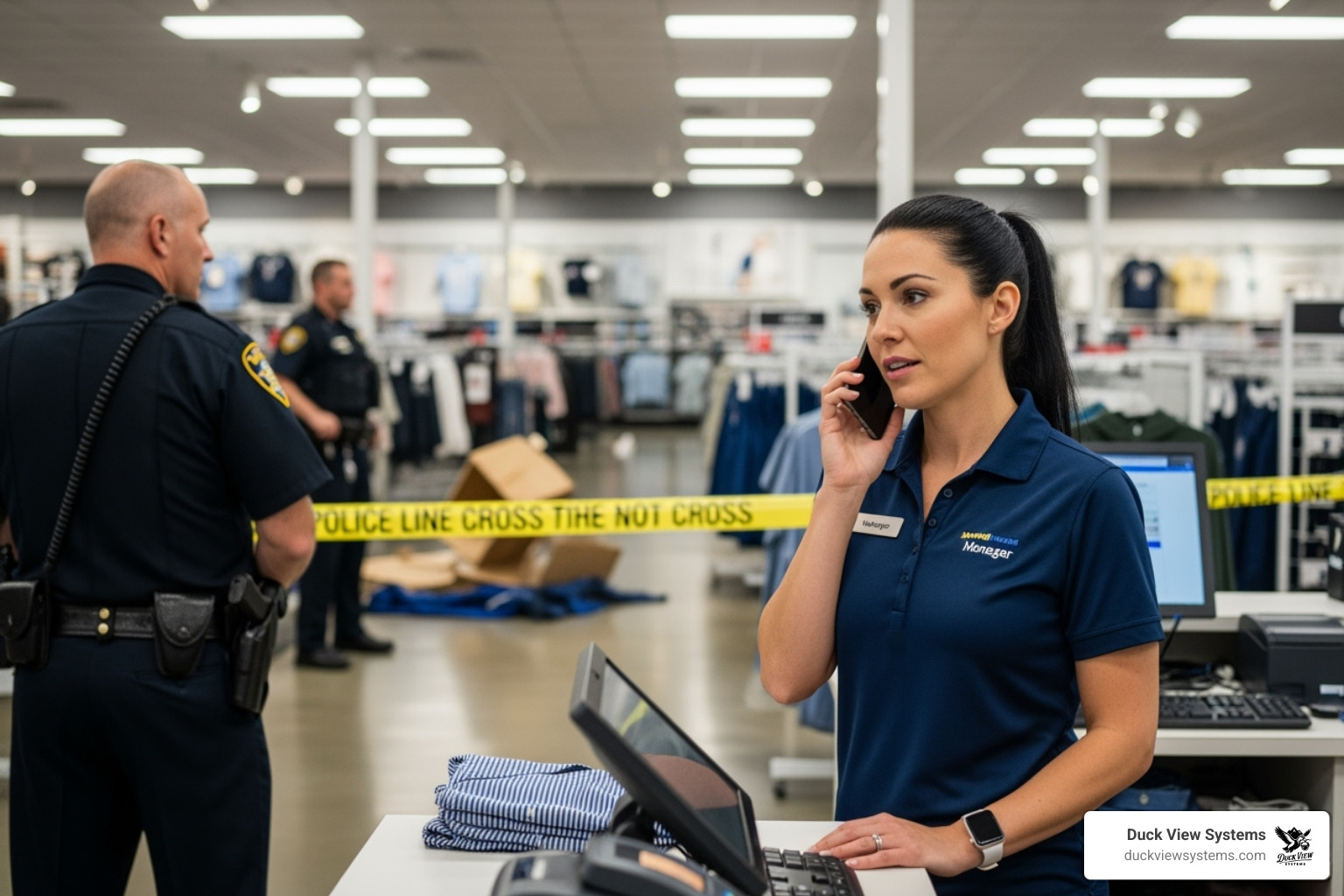
During a robbery, the only goal is to ensure everyone’s survival. Prioritize safety above all else. No amount of cash or merchandise is worth a human life. Train your team extensively on these core principles:
- Cooperate and Do Not Resist: Comply with the robber’s demands calmly and efficiently. Avoid any arguments or resistance.
- Stay Calm and Avoid Sudden Movements: Keep your hands visible and inform the perpetrator of any movements you need to make (e.g., “I need to reach down to open the register.”).
- Assume the Perpetrator is Armed and Dangerous: Even if you don’t see a weapon, treat the situation as if one is present.
- Be an Observant Witness: While complying, discreetly note physical traits, clothing, distinguishing marks, and direction of escape. Our exterior high-resolution cameras help capture those details when the incident involves entry, exit, or activity in lot/exterior areas – but your human observation is vital for context inside the store or immediate environment.
- Activate Alarms Safely: Only activate a silent panic alarm if it can be done without being detected and without putting anyone at risk.
The Immediate Aftermath: Secure, Report, and Document
Once the threat has physically left the premises, your actions in the following minutes are crucial for both safety and the subsequent investigation.
- Secure the Premises: Immediately lock the doors to prevent the perpetrator from re-entering and to secure the scene. Check on the well-being of all employees and customers. Administer first aid if needed and if you are trained to do so.
- Call 911 Immediately: This is the first and most important call to make. Provide the dispatcher with your location and a clear, concise summary of what happened. Give them the detailed description of the suspect and their escape vehicle that you observed.
- Preserve the Crime Scene: Instruct everyone not to touch anything the perpetrator may have touched, such as countertops, doors, or merchandise. This preserves potential fingerprint or DNA evidence for investigators.
- Document and Report: While waiting for police, have all witnesses write down their individual accounts of what happened. Memories fade quickly, so capturing these details immediately is vital. Use our Case Reporting feature to quickly locate and compile high-resolution, time-stamped video footage from exterior zones (e.g. parking lots, lot entry lanes, storefront perimeters) into a comprehensive evidence package for law enforcement. If in-store footage is available (from other systems), it can be combined. Full and prompt cooperation with investigators is key to a successful resolution.
Supporting Your Team and Improving for the Future
The impact of a robbery or violent theft lingers long after the police have left. Your responsibility as an employer extends to the emotional well-being of your team.
First, address the psychological trauma. Immediately provide your team with access to professional counseling through an employee assistance program (EAP) or other mental health resources. Employees may experience significant stress, anxiety, and fear. Showing compassion and providing tangible support is not only the right thing to do, but it also strengthens team loyalty and resilience.
Next, conduct a post-incident debrief with your team once the immediate crisis has passed. Analyze what happened, what went well in your response, and where there were security gaps. Use this analysis to update and reinforce your policies, procedures, and training programs. Was there a vulnerability that was exploited? Could communication have been better? Continuous improvement is the key to hardening your defenses and staying ahead of future threats.
You don’t have to face these challenges alone. A reliable security partner like Duck View Systems provides Dedicated Support to help you review footage, analyze incident data, optimize your system, and strengthen your defenses after an event.
Frequently Asked Questions about How to Prevent and Handle Robberies and Theft in Retail
You’ve got questions about how to prevent and handle robberies and theft in retail, and we’ve got answers based on our experience helping retailers across the United States.
What is the best way to stop shoplifters?
The most effective method is a layered approach. Greet every customer to show you’re attentive, maintain an organized store with clear sightlines, train staff to spot suspicious behavior, and use visible security technology like cameras and anti-theft tags as a strong deterrent.
Should my employees ever confront a shoplifter?
No. For safety and legal reasons, employees should never physically confront or try to detain a suspected shoplifter. Their role is to observe, report to management, and be a good witness for law enforcement. Human safety is always the priority over merchandise.
How can I protect my business from organized retail crime (ORC)?
Protecting against ORC involves a multi-layered strategy. This includes securing high-value merchandise, training staff to recognize group tactics like distraction, and fostering strong communication with local law enforcement and other nearby businesses to share information on active threats.
What is the difference between theft and robbery?
Theft, like shoplifting, is taking property without permission and without using force. Robbery is a more serious crime that involves taking property directly from a person by using force, threats, or intimidation. Prioritizing safety is especially critical during a robbery.
Are self-checkout lanes a major source of theft?
Yes, self-checkout areas can increase opportunities for theft, both accidental and intentional. Common issues include not scanning all items or swapping barcodes. Attentive staff assigned to the area and clear overhead video monitoring are key to mitigating these specific losses.
How to Prevent and Handle Robberies and Theft in Retail with AI-Powered Solutions
Protecting your retail business from the growing threats of theft and robbery requires weaving together people, processes, and technology into a single, comprehensive security strategy. If there is one key takeaway, it is this: proactive prevention beats reactive response every time. Stopping an incident before it happens, or even before it escalates, is how you truly protect your bottom line, your team, and your customers.
At Duck View Systems, we have built our business on this exact philosophy. Our AI-Powered Mobile Surveillance Units don’t just passively watch, they actively analyze and alert you to potential threats before they escalate. Whether you are working to secure a large Big Box Retailer or a local Specialty Retail Store, our solutions deliver the real-time intelligence you need to take control of your security.
What sets our team apart is our commitment to making how to prevent and handle robberies and theft in retail a practical, achievable goal. Our systems are proudly Built in the USA with the unique challenges of American retailers in mind. From our advanced AI Human Detection that reduces false alarms to our revolutionary “Natural Language Search” and Case Reporting features that save you time, we solve the real-world problems you face every day.
The retail landscape is more challenging than ever, but you do not have to face it unprepared. With the right strategy and the right security partner, you can create a safe and secure environment where your employees feel protected and your business can thrive.
Ready to transform your retail security from reactive to proactive? Learn more about How Duck View Works or Request a Quote today and let our team design a custom security solution for your specific needs. Your peace of mind is just a conversation away.