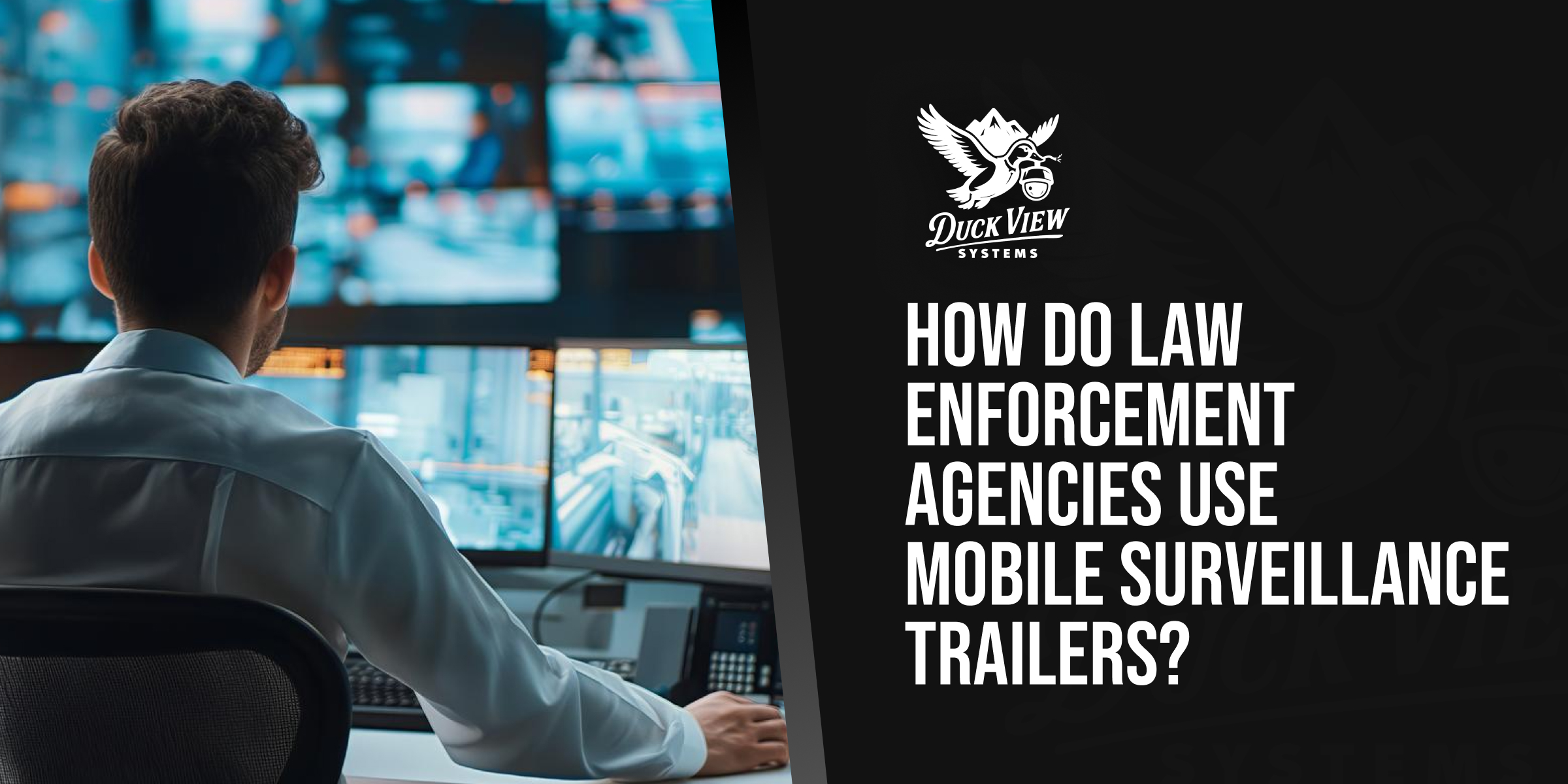
A law enforcement mobile surveillance trailer gives police departments, city agencies, and public safety teams a rapidly deployable, AI-powered monitoring platform that operates without permanent infrastructure. Unlike fixed cameras that require trenching and wired networks, these units arrive on a flatbed, raise a 20-foot telescoping mast, and go live in under one hour.
Agencies across the United States face a common set of pressures: shrinking budgets, officer shortages, and growing demand for proactive rather than reactive policing. Mobile surveillance trailers directly address all three.
Here is what a modern law enforcement mobile surveillance trailer delivers:
- 360-degree PTZ camera coverage with 25x optical zoom
- AI detection of crowds, fights, loitering, and vehicles
- License plate recognition for real-time vehicle identification
- Solar power and 4G/LTE connectivity with no grid power or Wi-Fi required
- Tamper-proof case reports are auto-generated for evidence and compliance
- Full deployment in under one hour by a single operator
Why Police Departments Are Adopting Mobile Units
Police departments are adopting mobile surveillance units because they provide continuous, cost-effective security coverage without the high expense of permanent staffing. Budget constraints are the single biggest driver. A 24/7 manned guard post costs an estimated $200,000 or more annually. A mobile surveillance trailer delivers continuous coverage at a fraction of that recurring cost, with no overtime, no sick days, and no shift gaps.
Officer shortages compound the problem. Many departments cannot staff high-crime corridors, transit hubs, or special events without pulling resources from other priorities. Consequently, a mobile unit placed in a high-crime zone provides constant crime prevention and documentation without requiring a physical officer presence.
Rapid deployment capability is a third factor. Traditional fixed cameras require electrical permits, conduit runs, and installation timelines measured in weeks. A mobile surveillance trailer eliminates every one of those dependencies. Officers and security coordinators can request a unit and have it operational the same day.
| Pro Tip:In our experience reviewing mobile surveillance deployments, the most effective setups prioritize visibility first. When deploying to a new high-crime zone, position the trailer so the mast camera has an unobstructed sightline across the highest-risk intersection or entry point. A clearly visible surveillance presence often changes criminal behavior immediately, even before additional units are added. Start with the single position that provides the widest coverage and strongest deterrent effect, then expand deployment coverage as needed. |
Core Law Enforcement Use Cases for Mobile Surveillance Trailers
High-Crime Area Saturation Deployments
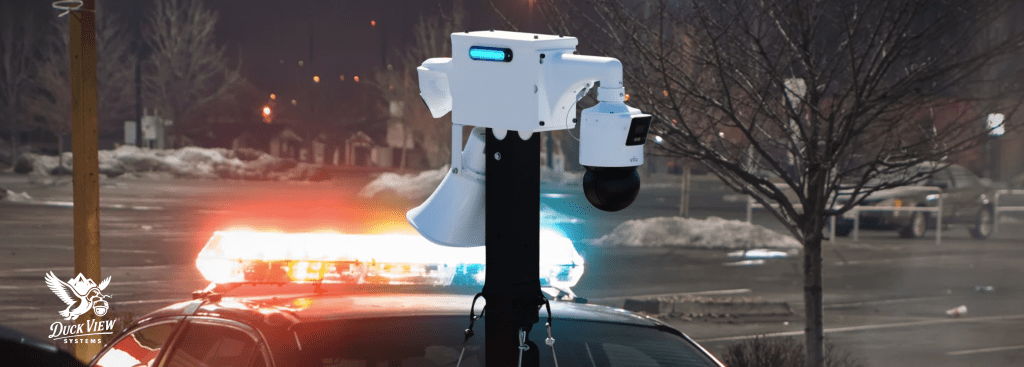
Placing a law enforcement mobile surveillance trailer in a chronic hot spot creates immediate, visible deterrence. The 20-foot illuminated mast, active camera heads, and strobe-light capability signal that the area is actively monitored. Deployments have produced a 62% drop in high-risk crimes and a 70% reduction in incidents in active coverage zones.
Agencies should conduct pre- and post-deployment analysis to verify results in their specific operating environment.
Traffic and Pedestrian Monitoring
PTZ cameras with 25x optical zoom allow operators to identify faces, license plates, and behaviors from hundreds of feet away. Sentry Mode enables the camera to rotate, zoom, and scan autonomously, even when no operator is watching, visualizing all incidents on a live GPS-based map. This capability is particularly valuable at busy intersections, transit corridors, and pedestrian plazas.
License Plate Recognition at Checkpoints
LPR functionality logs every vehicle entering a monitored corridor automatically. Each plate is captured with a timestamp, camera location tag, and linked video clip. If a stolen vehicle or vehicle of interest enters the zone, the system generates an immediate alert to dispatch.
Furthermore, the AI filters authorized vehicles so operators receive alerts only for genuinely flagged or unrecognized plates, not every vehicle that passes through the zone.
Event and Crowd Control
Concerts, political rallies, sporting events, and public demonstrations present crowd management challenges that fixed cameras cannot solve. Mobile surveillance trailers can be positioned at perimeter entry points before an event begins and repositioned as crowd patterns shift throughout the day.
The AI Patrol feature monitors behavior patterns, detects rapid crowd surges, and identifies high-risk movement before it reaches a threshold requiring intervention. Additionally, the system detects fighting behavior and stabbing-related arm motions, and alerts dispatch in real time with location pins and live video.
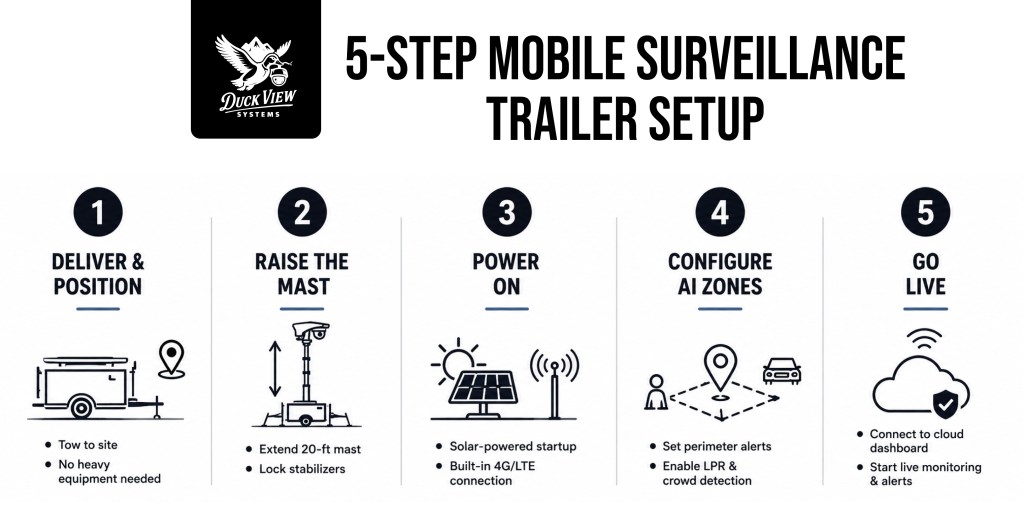
| # | Step | What Happens |
| 1 | Deliver and Position | Tow the unit to the site with a standard vehicle. No heavy equipment needed. |
| 2 | Raise the Mast | Extend the 20-foot telescoping mast. Lock with four stabilizing outriggers. |
| 3 | Power On | Solar panels and 4G/LTE modem activate automatically. No Wi-Fi required. |
| 4 | Configure AI Zones | Define virtual perimeters, LPR lanes, crowd detection thresholds, and audio alerts. |
| 5 | Go Live | Cloud dashboard access confirmed. Real-time alerts and video streaming begin. |
Illegal Dumping and Environmental Crime Monitoring
Illegal dumping is a persistent code enforcement problem in many jurisdictions. Mobile surveillance trailers with AI loitering detection and vehicle recognition can be placed at known dumping sites to document incidents in real time. Consequently, the system generates case reports with vehicle footage, timestamps, and chain-of-custody metadata, ready for citation or prosecution without any manual compilation.
Emergency Command Post Support
During major incidents such as natural disasters, mass casualty events, or civil emergencies, a mobile surveillance trailer functions as a deployable situational awareness node. The unit connects via 4G/LTE, feeds live video to a command center dashboard, and maintains cloud-synced footage even during temporary connectivity interruptions.
The Technology That Makes LEA Applications Possible
The capability of a law enforcement mobile surveillance trailer depends entirely on the AI platform running behind the cameras. Duck View Systems powers advanced object detection that transforms raw video into actionable intelligence that agencies can act on immediately.
AI Detection Capabilities Relevant to Law Enforcement
- Crowd surge and congestion detection: flags gathering before it exceeds safe density thresholds
- Fight and aggression detection: identifies rapid arm motions and posture shifts associated with edged weapons
- Loitering detection: configurable dwell-time threshold for any defined zone
- AI Audio Event Detection: detects gunshots, glass breaking, and raised voices
- Vehicle type and color recognition: tracks specific vehicles across the coverage area
- License plate recognition: captures and logs plates with immediate alert capability
- Fire and smoke detection: active monitoring for post-incident hazard escalation
Real-Time Alert Escalation to Dispatch
Every alert from the Duck View Systems platform includes a location pin, live video feed, and AI-tagged event clip. Dispatch receives actionable intelligence, not just a notification. The Virtual Guard feature adds an optional human layer: a live operator verifies the threat and issues a voice-down warning through the trailer’s onboard speakers before notifying officers directly.
This escalation sequence, from AI detection through operator verification, live voice-down, and law enforcement contact with a verified in-progress report, means responding officers receive priority dispatch rather than a routine automated alarm.
Tamper-Proof Evidence Recording
The Case Reporting feature generates a structured incident file automatically for every triggered event. The file includes time-stamped video clips, snapshot thumbnails, AI-tagged metadata, and a chain-of-custody log. Reports export as PDFs with one click and are ready for law enforcement referral, insurance submission, or court proceedings without any manual assembly.
Natural Language Search for Rapid Investigation
Instead of scrubbing through hours of footage, officers and investigators can use Natural Language Search to find specific clips instantly. A query like “person in red jacket near gate” or “blue truck after midnight” returns matching results across all cameras in seconds. This dramatically reduces investigation time during active incidents or post-event reviews.
| Pro Tip:For agencies that want AI-monitored coverage without staffing an internal operations center, Duck View Systems has partnered with Blue Eye, a professional remote monitoring service. Blue Eye operators verify threats, issue live voice-down warnings, and contact law enforcement with a verified incident report, compressing response time without adding internal headcount. |
How Long Can a Police Deployment Last?
Deployment duration depends on the operational objective. Duck View Systems offers both rental and purchase options, giving agencies flexibility across short-term operations and long-term installations.
Short-term deployments of 30 to 90 days are common for special event coverage, seasonal hot-spot saturation, or pilot programs. Longer contracts of six months to two or more years are typical for persistent high-crime zone deterrence, municipal monitoring programs, and emergency infrastructure protection.
Because the trailer is towable and repositionable in under one hour, agencies can relocate units as crime patterns shift, without new infrastructure costs or installation timelines. A unit placed at a downtown intersection for a summer crime surge can move to a school zone corridor for fall programming without any additional permitting or setup.
For a deeper look at hardware specifications, solar power configuration, and AI software capabilities across all deployment scenarios, the mobile surveillance trailer complete guide covers each of those topics in full technical detail.
NDAA Compliance and Government Procurement
Federal agencies and many state and local governments are required to procure surveillance equipment that complies with the National Defense Authorization Act (NDAA). Specifically, Section 889 prohibits the use of telecommunications and video surveillance equipment from certain foreign manufacturers.
Duck View Systems trailers are manufactured in the United States, based in Kaysville, Utah. Agencies evaluating compliance should reference the GSA Section 889 NDAA compliance guidance and confirm specific component sourcing with Duck View Systems directly when preparing procurement documentation.
Government procurement pathways vary by jurisdiction. Many agencies access mobile surveillance trailers through cooperative purchasing agreements or direct quote processes. Duck View Systems works with integrators and government agencies to support procurement, site assessment, and configuration planning.
Agencies developing evaluation criteria for mobile surveillance equipment can also reference ASIS International’s physical security standards, particularly around evidence chain-of-custody requirements and camera performance specifications.
Mobile Surveillance Trailers vs. Fixed Camera Systems for Law Enforcement
The table below compares performance across the factors that matter most in law enforcement deployments.
| Factor | Mobile Surveillance Trailer | Fixed Camera System |
| Coverage Area | 360-degree PTZ, unlimited repositioning | Fixed field of view only |
| Deployment Time | Under one hour, no infrastructure | Days to weeks, trenching required |
| Off-Grid Operation | Fully solar and LTE, no power needed | Requires grid power and a network |
| AI Threat Detection | Crowd, fight, LPR, loitering, audio | Basic motion only (typical) |
| Evidence Package | Auto case report, tamper-proof logs | Manual footage review required |
| Relocatability | Tow to any location in under an hour | Permanently fixed once installed |
| Active Deterrence | Strobes, sirens, live voice-down | Rarely included as standard |
For agencies operating in rural corridors, remote jurisdictions, or areas with no existing infrastructure, the off-grid capability of a mobile unit makes fixed cameras functionally impractical. The trailer brings power, connectivity, AI processing, and deterrence tools to any site a truck can reach.
Duck View Systems: Built for Law Enforcement Deployments
Duck View Systems is a US-based manufacturer headquartered in Kaysville, Utah. The company builds AI-powered mobile surveillance trailers designed for demanding outdoor environments, including law enforcement, construction, energy infrastructure, and public safety applications.
Every unit includes the AI platform, solar and battery power, 4G/LTE connectivity with multi-carrier support, a 20-foot telescoping mast with 4MP 25x optical zoom PTZ cameras, and a full deterrence suite including LED floodlights, strobe lights, and a weatherproof loudspeaker. The mobile surveillance trailer solutions page details hardware specifications, pricing options, and the complete AI feature suite.
For agencies that want professional AI monitoring without staffing an internal operations center, Duck View Systems has partnered with Blue Eye, a professional remote monitoring service. Blue Eye operators monitor trailer feeds, verify threats, issue live voice-down warnings, and contact law enforcement with a verified incident report, providing the human judgment layer that autonomous AI alone cannot replace.
Agencies can choose self-monitoring via dashboard access, AI-only autonomous deterrence, or the full AI plus human operator model through the Blue Eye partnership. Duck View Systems offers both leasing and purchase options. Most clients pay between $1,650 and $2,000 per month on lease arrangements. For precise government pricing and multi-unit configurations, contact Duck View directly for a quote.

Frequently Asked Questions About Law Enforcement Mobile Surveillance Trailers
How quickly can a law enforcement mobile surveillance trailer be deployed?
Most Duck View Systems deployments are operational in under one hour. One person can tow the unit, raise the mast, and activate LTE connectivity and AI detection without any trenching or wiring.
Do mobile surveillance trailers work without Wi-Fi or power at the site?
Yes. Duck View trailers run on solar panels and onboard batteries, and connect via 4G/LTE cellular. No site Wi-Fi, electrical hookup, or generator is required, making them fully functional at remote rural locations.
What AI detection capabilities are included for police use cases?
The platform detects crowd surges, fighting behavior, stabbing-related motions, loitering, intrusion, vehicle type and color, LPR, fire, smoke, and audio events, including gunshots and glass breaking.
What is the camera range on a mobile surveillance trailer?
The PTZ camera provides 360-degree coverage with 25x optical zoom. Infrared night vision covers up to 500 feet in complete darkness. The 20-foot mast elevation extends effective coverage across wide open areas.
How is evidence packaged for law enforcement after an incident?
Case Reporting auto-generates a structured file with time-stamped video clips, snapshots, AI-tagged metadata, and chain-of-custody logs. Reports export as PDFs in one click, ready for law enforcement referral.
Can a mobile surveillance trailer integrate with existing dispatch systems?
Duck View Systems recommends contacting their team directly to discuss integration with existing Video Management Systems or access control systems.
What does NDAA compliance mean for government procurement of surveillance trailers?
NDAA Section 889 prohibits equipment from certain foreign manufacturers. Duck View trailers are manufactured in Utah. Agencies should confirm specific component sourcing with Duck View directly for procurement documentation.
How long do most law enforcement deployments last?
Deployments range from 30-day special event coverage to contracts of two or more years for persistent high-crime zone monitoring. Duck View offers both rental and purchase options to match operational timelines.
Law Enforcement Mobile Surveillance Trailers: The Bottom Line
A law enforcement mobile surveillance trailer gives agencies a proactive, AI-driven platform that deploys faster than any fixed system, operates without infrastructure dependencies, and generates evidence-grade documentation automatically. The combination of solar power, 4G/LTE connectivity, crowd and behavior detection, LPR, and tamper-proof case reporting makes these units effective across the full spectrum of policing needs, from persistent hot-spot deterrence to event crowd control to emergency command support.
The decision between mobile surveillance and fixed infrastructure is straightforward for most law enforcement operating environments. If your site is temporary, remote, high-risk, or subject to shifting priorities, a mobile trailer outperforms a fixed system in every dimension that matters operationally.
Duck View Systems builds these units in Utah for exactly this environment. Agencies that want professional monitoring without adding headcount can layer in Blue Eye’s remote monitoring service for a complete response capability, from autonomous AI detection through to live operator intervention and verified law enforcement notification.