
How to Prevent Theft in Retail: The Rising Tide of Retail Theft
How to prevent theft in retail has become one of the most pressing challenges for business owners. Retail theft and shrink remain a major issue. The National Retail Federation reported $112.1 billion in shrinkage for 2022, and multiple analysts project losses could exceed $115 billion by 2025 as retailers continue to combat ORC and aggression. This follows a sharp increase in incidents over the past two years, a trend that continues to challenge the industry. This surge is a complex mix of external threats and internal vulnerabilities that can devastate your bottom line.
How to Prevent Theft in Retail: Quick Prevention Strategies
- Train staff to greet every customer and provide proactive service.
- Organize your store with clear sightlines and eliminate blind spots.
- Secure high-risk items in locked displays or well-monitored areas.
- Install modern surveillance with AI-powered detection capabilities.
- Implement strong controls for cash handling and inventory management.
- Deploy perimeter security in parking lots to deter organized crime.
The financial impact goes beyond lost merchandise. For every stolen item with a 20% profit margin, you must sell five more just to recover the loss. Modern retail theft has evolved beyond simple shoplifting to include sophisticated Organized Retail Crime (ORC) syndicates, a rise in violent incidents, and internal theft, which accounts for a significant portion of all retail losses.
The good news is that a well-designed, multi-layered security approach can dramatically reduce these losses. The most effective strategies combine smart store design, engaged employees, and intelligent technology.
At Duck View Systems, we’ve spent years helping businesses protect their assets through advanced surveillance. Our experience shows that understanding how to prevent theft in retail requires a comprehensive approach that addresses both the human and technological aspects of loss prevention.
Understanding the Two Fronts of Retail Theft
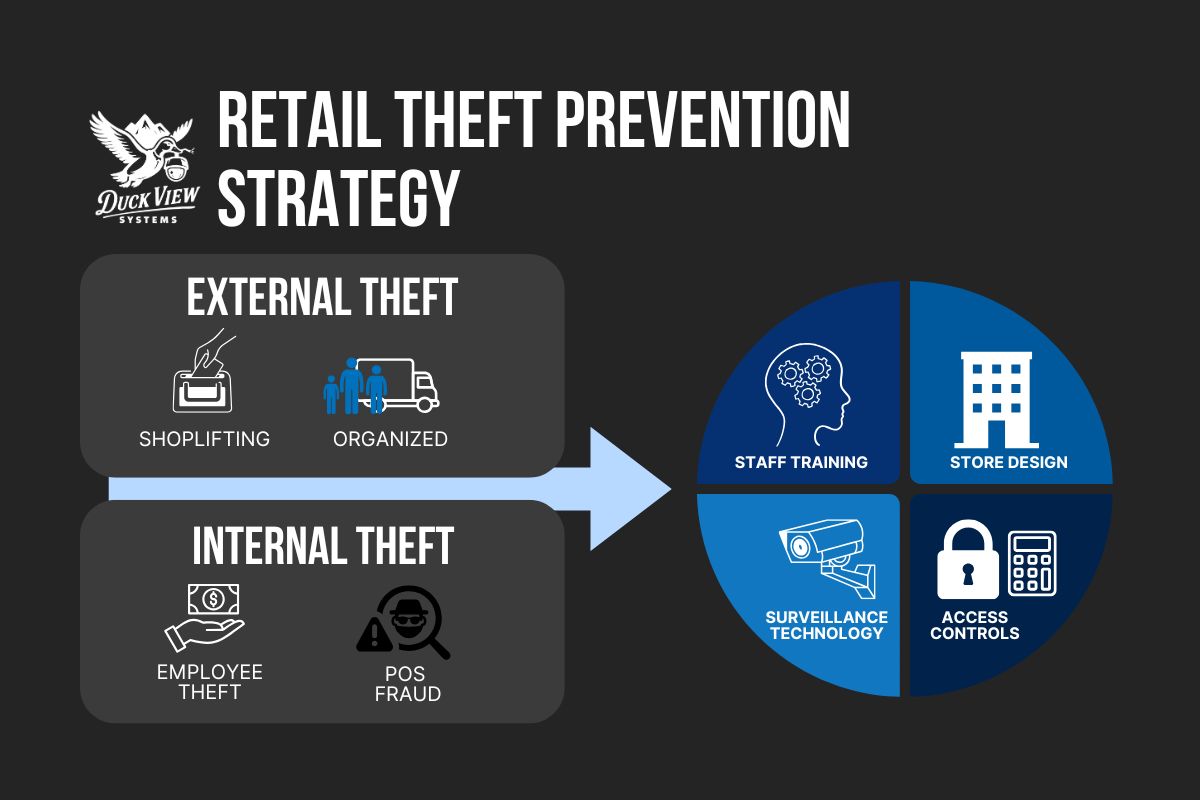
When you’re learning how to prevent theft in retail, it’s crucial to understand that you’re defending against threats from two different directions: external and internal. A one-size-fits-all approach won’t work, as the tactics that deter a shoplifter won’t necessarily prevent employee fraud. Let’s break down these two fronts so you can build targeted defenses.
External Theft: Threats from the Outside
External theft is any loss caused by people who don’t work for your business. This ranges from impulse shoplifting to highly planned operations.
- Traditional Shoplifting: This remains common but has evolved. Opportunistic thieves act on impulse, while professional shoplifters use sophisticated concealment tactics like specially designed bags or modified strollers. They study your store and strike when conditions are optimal.
- Price Tag Switching: Thieves swap expensive tags for cheaper ones, a crime you may not find until inventory checks.
- Organized Retail Crime (ORC): This is the real game-changer. ORC groups are sophisticated criminal syndicates that conduct surveillance, plan coordinated attacks, and target multiple locations. Recent analyses show shoplifting levels remain above pre-pandemic rates in major cities, and retailers report more aggression tied to theft events. These groups use online marketplaces to quickly sell stolen goods, which prompted the federal INFORM Consumers Act in 2023 to increase seller verification on these platforms.
- Destruction of Property: “Smash and grab” incidents result in immediate losses and create an atmosphere of fear that can traumatize staff and drive away customers.
Internal Theft: The Threat from Within
If external theft is a burglar, internal theft is someone you trust slowly emptying your safe. While external theft is highly visible, some security analysts estimate that a significant percentage of major theft losses are internal. Furthermore, data from the U.S. Chamber of Commerce suggests that employee dishonesty contributes to a substantial number of business failures. Your employees know your systems, vulnerabilities, and how to exploit procedural gaps.
- POS Fraud: Employees might void sales and pocket cash, create fake returns, or give unauthorized discounts to friends.
- Merchandise Theft: This often starts small and escalates. Unlike shoplifters, employees can walk merchandise out to their cars during breaks or after their shifts.
- Inside Accomplices: The most dangerous threat is when employees collaborate with external theft rings, providing information about security, delivery schedules, or high-value inventory locations.
Here’s how these two types of theft compare:
| Aspect | External Theft | Internal Theft |
|---|---|---|
| Common Methods | Concealment, price switching, grab-and-run, organized raids | POS manipulation, merchandise theft, discount abuse, cash skimming |
| Primary Motivations | Quick profit, personal use, addiction, thrill-seeking | Financial pressure, perceived unfair treatment, opportunity, gradual escalation |
| Key Prevention Strategies | Visible deterrents, staff engagement, surveillance technology, store design | Background checks, operational controls, audit procedures, positive workplace culture |
Understanding these distinct threats is the first step. External threats require visible deterrents and real-time detection, while internal threats demand strong operational controls and a culture of accountability.
Your First Line of Defense: How to Prevent Theft in Retail with In-Store Strategies
The most effective approach to how to prevent theft in retail often begins with simple, low-cost strategies. Your store’s environment and your team’s customer interactions form the foundation of your security, creating an invisible guard that deters thieves before they act. These strategies also happen to improve the customer experience.
Designing a Theft-Resistant Environment
A well-designed retail space feels secure. Your store layout is your first line of defense, and small changes can yield dramatic results.
- Clear Sightlines: Ensure staff can see every corner of the store from main service areas. Keep display shelves at a reasonable height (no taller than five feet) and avoid clutter that creates hiding spots for shoplifters.
- Eliminating Blind Spots: Use simple convex mirrors in awkward corners or behind large displays to expand your field of vision. This is an affordable solution for any retail store, including Specialty Retail Stores.
- Strategic Product Placement: Position high-risk items (small, valuable, easily concealed) in high-traffic areas or near the checkout counter where they are constantly visible.
- Locked Displays: While sometimes frustrating for customers, locked displays are necessary for your most valuable products. A good compromise is to use secure demonstration units that let customers handle products without being able to remove them.
- Professional Anti-Theft Signage: Research from criminologists and loss prevention experts shows that visible security signs are a significant deterrent, causing many opportunistic criminals to choose less protected targets. Place clear, professionally designed signs at eye level near entrances and high-value areas to send a clear message without creating a hostile environment.
The Power of People: Customer Service as a Deterrent
Excellent customer service is one of the most effective theft prevention tools available. Shoplifters prefer to operate in anonymity, and attentive staff take that away.
When your team greets every customer, makes eye contact, and offers assistance, potential thieves know they’ve been seen. A warm “Let me know if you need help finding anything” makes honest customers feel welcome and dishonest ones uncomfortable.
Proactive customer service, where staff actively walk the floor and engage with shoppers, serves as natural monitoring. Train your team to recognize suspicious behavior, such as customers who seem more interested in staff locations than merchandise. However, the most important rule is to never confront suspected shoplifters directly. Employee safety is paramount. Instead, teach staff to de-escalate through service by approaching with a helpful offer, which often causes thieves to abandon their plans without conflict. Finally, ensure adequate staffing levels during peak hours and other vulnerable times.
In-store strategies are not just about loss prevention; they create an environment where honest customers feel valued and thieves feel observed.
Fortifying from Within: Building a Culture of Integrity
While external threats grab headlines, internal theft quietly drains retail profits. The impact is severe; studies have repeatedly shown that employee theft is a contributing factor in a large percentage of business failures, making it a critical aspect of how to prevent theft in retail. Unlike visible external threats, internal theft can go undetected for years, eroding your bottom line and team trust. Building a trustworthy team and robust internal processes transforms these vulnerabilities into strengths.
Hiring and Training for Honesty
Preventing internal theft starts before an employee is hired. It’s easier to hire honest people than to reform dishonest ones.
- Thorough Background Checks: Comprehensive checks should include employment verification, credit checks, and criminal history. This helps verify honesty and identify potential pressure points that might increase theft risk.
- Comprehensive Employee Training: From day one, every employee should understand your loss prevention policies, code of conduct, and the consequences of theft. This sets clear expectations.
- Positive Work Culture: Employees who feel valued, respected, and fairly compensated are far less likely to steal. When people feel like part of a team, theft becomes personally distasteful.
Implementing Strong Operational Controls
Robust controls protect both your business and your employees by making honesty easy and theft difficult.
- Separation of Financial Duties: Never have one person responsible for all aspects of a financial transaction. This creates natural checks and balances that make fraud harder to conceal.
- Strict Cash Handling Procedures: Implement secure cash drop procedures, minimize cash on hand, and conduct regular bank deposits to create clear accountability.
- Regular POS System Audits: Use your point-of-sale data to look for patterns like excessive voids, unusual returns, or abnormal discount usage by specific employees.
- Robust Inventory Management: Regular, consistent stock counts serve as an early warning system, helping you identify discrepancies and pinpoint when and where losses might be occurring.
- Access Control: Restrict access to vulnerable areas like stockrooms and cash offices to authorized personnel only. Modern systems create detailed audit trails of who accessed what areas and when.
- Clear Return Policies: Require receipts for refunds and implement approval processes for high-value returns to create barriers against fraud.
Leveraging Technology: The Ultimate Watchdog Against Retail Crime
In today’s retail landscape, understanding how to prevent theft in retail means embracing technology that works as hard as you do. Modern surveillance solutions are more than just cameras; they are intelligent partners that deter, detect, and help investigate theft.
Intelligent Video Surveillance: More Than Just a Camera

Our Duck View Systems cameras deliver high-resolution, time-stamped footage that captures every crucial detail. This clarity is essential for identifying individuals and documenting incidents with evidence that holds up. Our zoom-capable cameras let you focus on suspicious activity without losing the bigger picture.
The real power lies in our AI Crime Prevention and AI Human Detection capabilities. Our systems don’t just record; they understand what they’re seeing. The AI differentiates between human activity and other movements, dramatically reducing false alarms. It also learns to recognize suspicious behaviors like loitering or entering restricted areas, sending immediate alerts.
One of our most popular features is our AI-powered “magic search.” Instead of scrolling through hours of footage, you can type “person in red shirt” and instantly find the relevant clips. This has been a game-changer for our clients, cutting investigation time from hours to minutes. Our Real-Time Monitoring capabilities mean you can watch your store from anywhere. For an extra layer of protection, our virtual guard services provide remote monitoring by trained professionals who can alert authorities the moment suspicious activity is detected.
Securing the Perimeter: How to Prevent Theft in Retail Parking Lots
Your security strategy shouldn’t stop at the front door. Parking lots are often the frontline for crime, especially for ORC groups who use them as staging areas. Our Parking Lot Security solutions create a protective barrier around your property.
Visible security measures, like our AI-powered mobile surveillance units, send a clear message that your property is monitored. Most criminals simply move on to easier targets. By deploying our units in parking lots, you create an environment hostile to criminal planning. Beyond theft, our cameras detect vandalism and loitering in real-time, allowing for immediate intervention.
Our AI-powered mobile surveillance units are valuable for retail because they deploy quickly and adapt to your needs, whether for seasonal events or temporary hotspots. The evidence collected is invaluable for law enforcement collaboration. As emphasized in expert testimony to the U.S. Senate, sharing clear video helps police build stronger cases against criminals, especially sophisticated ORC syndicates.
Measuring Success: The Financial and Social ROI of Loss Prevention
Implementing effective strategies for how to prevent theft in retail isn’t just an expense, it’s one of the smartest investments you can make for your business’s long-term growth.
Calculating the Financial Return
The financial impact of loss prevention is compelling. Every dollar invested in security can return several dollars in protected revenue.
- The Multiplication Effect of Theft: When a $100 item with a 20% profit margin is stolen, you don’t just lose $100; you lose the $20 profit. To recover, you’d need to sell five more identical items just to break even.
- Shrinkage Reduction: Our AI-powered surveillance systems help businesses prevent shrink and reduce theft. When you prevent shrink, more revenue stays where it belongs: contributing to your growth.
- Long-Term Savings: A comprehensive security system helps reduce many hidden costs, such as time spent on investigations and the operational burden of replacing stolen inventory. Additionally, a demonstrably secure environment can be a positive factor when discussing insurance premiums with your provider. For Big Box Retailers, protecting high-value assets is even more critical.
The Non-Financial Benefits
The intangible benefits of a secure retail environment are just as valuable.
- Employee Safety and Morale: When your team feels protected from potential violence, they are more confident, productive, and loyal. Reducing the risk of violent crime creates a better workplace.
- Customer Experience: Shoppers feel safer and more comfortable in a secure store. They spend more time browsing and return more frequently.
- Brand Reputation: A business known for its safe, well-managed environment builds a strong, positive reputation that attracts customers and sets you apart from competitors.
- Operational Insights: Our intelligent surveillance systems generate valuable data on store traffic and customer behavior, helping you make informed decisions about staffing, layout, and more.
The ROI for loss prevention isn’t just about money saved, it’s about creating a thriving business where employees feel secure, customers feel welcome, and you can focus on growth.

Frequently Asked Questions about Preventing Retail Theft
When business owners first start thinking about how to prevent theft in retail, they often have similar questions. Here are the most common ones we hear.
What are the primary types of retail theft?
Understanding your enemy is the first step. Retail theft falls into two main categories:
- External Theft: This is what most people picture, including individual shoplifters and, more dangerously, Organized Retail Crime (ORC) groups. These sophisticated syndicates plan coordinated attacks, targeting high-value merchandise for quick resale online.
- Internal Theft: This comes from within your own team. It includes employees stealing merchandise, manipulating the POS system for cash, abusing discounts, or acting as inside contacts for external theft rings. It’s challenging because these individuals already have your trust and access.
A comprehensive security strategy must address both fronts.
What is the most effective way to stop shoplifting?
There’s no single magic bullet. The most successful retailers use a multi-layered approach that is surprisingly effective.
- Your People: Well-trained staff who provide excellent customer service make shoplifters feel uncomfortable by removing their anonymity.
- Your Store Design: An organized store with clear sightlines, minimal blind spots, and professional anti-theft signage makes it much harder to conceal merchandise.
- Modern Technology: This is where our Intelligent Video Surveillance systems shine. Our AI-powered cameras don’t just record, they actively detect suspicious behavior, creating a powerful deterrent and an invaluable investigative tool.
When these layers work together, they create a formidable defense that makes your store an unattractive target.
How does employee training help prevent theft?
Employee training is a two-for-one deal in loss prevention, protecting you from both internal and external threats.
Internally, training establishes clear ethical boundaries and consequences from day one, creating a culture of integrity. It also covers practical protocols for cash handling and inventory management.
For external theft, trained employees become your eyes and ears. They learn to recognize suspicious signs and, more importantly, how to respond. The key is teaching them to use customer service, not confrontation. A friendly “Can I help you find anything?” is incredibly effective at deterring theft while maintaining a positive customer experience and keeping employees safe.
How to Prevent Theft in Retail: A Proactive Stance on Retail Security
Learning how to prevent theft in retail requires a shift from a reactive to a proactive mindset. Too many business owners wait until after a significant loss to take action. The most successful retailers understand that effective loss prevention is about creating layers of protection that work together seamlessly.
A comprehensive security strategy is no longer a luxury, it’s essential. Retail theft is growing more sophisticated and costly. Businesses that don’t adapt will find themselves at a significant disadvantage.
At Duck View Systems, we provide the technological backbone for robust loss prevention. Our AI-powered mobile surveillance units represent the cutting edge of retail security. Our high-quality, zoom-capable cameras capture every detail with crystal clarity, ensuring you have the evidence needed for prosecution.
What sets our solutions apart is their built-in intelligence. Our AI-powered “magic search” feature allows you to locate specific incidents by typing simple descriptions, dramatically reducing investigation time. Our virtual guard services provide professional monitoring, with our team alerting law enforcement the moment suspicious activity is detected.
The flexibility of our mobile surveillance units is a key advantage. They can be deployed quickly to address seasonal challenges, secure a parking lot, or target specific theft hotspots. This adaptability means you get a security solution that works for your unique business.
We understand that every retail operation is different. Our team works with each client to design a security solution that addresses their specific needs and budget. When you partner with Duck View Systems, you’re investing in a comprehensive approach that protects your assets, supports your staff, and creates a safer shopping environment. To see how our advanced technology can be customized for your retail security needs, we invite you to connect with our team of experts.