Why Construction Site Safety Matters More Than Ever
Construction site safety is critical, as the industry accounted for nearly 1 in 5 workplace deaths in 2022. The consequences of poor safety are severe, impacting project momentum, worker morale, company reputation, and your bottom line. To improve site safety, focus on these key areas:
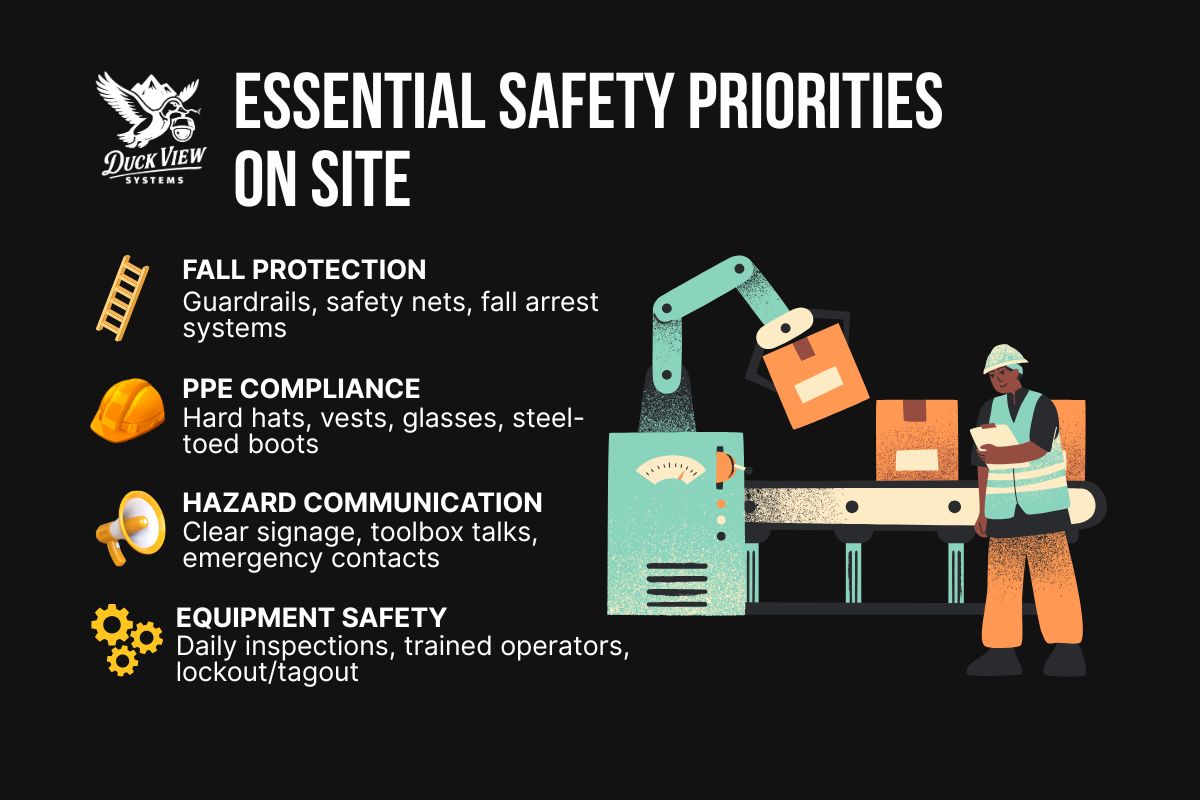
Essential Construction Site Safety Priorities:
- Fall Protection: Use guardrails, safety nets, and personal fall arrest systems for work above six feet.
- PPE Compliance: Enforce consistent use of hard hats, high-visibility vests, safety glasses, and steel-toed boots.
- Hazard Communication: Implement clear signage, daily toolbox talks, and accessible emergency contacts.
- Equipment Safety: Perform daily inspections, use qualified operators, and follow lockout/tagout procedures.
The reality is stark: falls are the leading cause of fatalities, accounting for 51% of all construction deaths, yet they are almost entirely preventable with proper safety measures.
The Foundation: Building a Bulletproof Safety Culture
Building exceptional construction site safety starts with culture, the shared understanding that safety is everyone’s top priority. When workers trust that you genuinely care about their well-being, they become more engaged, productive, and loyal. A strong safety culture fosters trust that improves your reputation, keeps projects on track, and creates a workplace where people want to be.
Understanding and Adhering to Safety Regulations
Safety regulations are lessons learned from past accidents. In the United States, OSHA standards are the foundation, while in Canada, you must follow the Canada Occupational Health and Safety Regulations and any additional provincial regulations.
As the principal contractor, you are responsible for ensuring every subcontractor complies. Failure to do so can lead to legal liability, steep fines, and work stoppages that derail project timelines. Safety inspectors have the authority to halt work for serious violations.
The ROI of Safety: Beyond Accident Prevention
Investing in safety provides a significant return. A strong safety record attracts top talent, reducing recruitment costs. It’s also a key factor when clients are winning construction contracts, giving you a competitive edge. The financial benefits continue with lower insurance premiums and improved productivity, as you avoid the delays and costs associated with accidents. Prioritizing construction site safety is an investment in consistent, predictable project delivery.
On-Site Execution: Proactive Hazard Management
The real test of construction site safety is in the daily execution. Proactive hazard management means staying ahead of risks on a site that changes constantly. It’s about identifying and addressing potential dangers before they cause harm.

Identifying and Mitigating Common Construction Site Hazards
Most construction accidents are preventable. Here are the common hazards and key precautions:
Falls from Height
Falls are the number one cause of serious injuries on construction sites. Guardrails, safety nets, and personal fall arrest systems are must-haves whenever work is done above six feet. Make sure every floor opening and skylight is either covered or protected to keep everyone safe.
Slips, Trips, and Same-Level Falls
A clean site is always a safer site. Set a regular cleanup routine and keep waste and loose materials under control. Removing debris and drying up puddles makes it easier for workers to move without the risk of slipping or tripping.
Struck-By Incidents
Moving equipment and falling objects can cause major accidents. Workers should wear hard hats at all times, materials need to be secured, and traffic routes for vehicles should be clearly separated from foot traffic.
Electrical Hazards
Electricity is one of the most unpredictable hazards. Always use GFCIs for temporary power, stay clear of overhead lines, and ensure only trained professionals handle electrical tasks. During maintenance, lockout and tagout procedures are key to preventing shocks.
Excavation Work
Trenches may not look dangerous at first, but collapses happen fast and often with deadly results. Any trench deeper than five feet needs protective systems like sloping, shoring, or shielding. Daily inspections are a simple but powerful way to keep workers safe.
Chemical Exposure
Chemicals need careful handling to protect both health and safety. Every chemical should be labeled properly, with Safety Data Sheets (SDS) easy to access. Good ventilation and the right respiratory protection help limit harmful exposure on site.
The Critical Role of Personal Protective Equipment (PPE)
PPE is the last line of defense. It must be used correctly and consistently.
- Hard hats protect from impacts, while safety glasses shield eyes from debris.
- High-visibility vests ensure workers are seen by equipment operators.
- Steel-toed boots prevent foot injuries from falling objects or punctures.
- Gloves protect hands from cuts, chemicals, and temperature extremes.
- Hearing protection is vital in noisy environments to prevent permanent damage.
- Respiratory protection is required when airborne hazards like dust or fumes cannot be otherwise controlled.
Providing PPE is not enough; you must enforce its use and ensure it is properly maintained. Technology like AI-driven PPE detection can automate compliance monitoring, adding an extra layer of protection.
Best Practices for Tool and Machinery Safety
Think about how often tools and heavy machinery are used on a job site. With that much daily use, it’s no surprise they’re also a leading cause of accidents when handled the wrong way. That’s why safety checks and proper training make all the difference.
Daily inspections are the first line of defense, and any defective equipment should be tagged and taken out of service right away. Only trained and certified operators should run heavy machinery, while Lockout/Tagout procedures are critical during maintenance to keep hazardous energy under control.
Moving parts must always be guarded, and tools should never be used for anything other than their intended purpose. Finally, a consistent maintenance schedule combined with encouraging workers to report issues immediately helps keep every tool reliable and every worker safe.
Communication and Training: Your First Line of Defense
Clear communication and ongoing training are your most powerful defenses against accidents. When your team understands the hazards and their role in protecting each other, you create a truly safe environment.
Enhancing construction site safety with Clear Communication
Effective communication makes a site safer and more efficient.
- Safety signage: Use clear, universal signs to indicate prohibitions (No Entry), mandatory actions (Hard Hat Area), warnings (High Voltage), and safe conditions (First Aid).
- Site induction: Every person entering the site needs a thorough induction covering specific hazards, emergency procedures, and safety rules.
- Toolbox talks: These brief, daily meetings are perfect for addressing the day’s tasks, highlighting immediate hazards, and reinforcing safety messages.
- Hazard reporting systems: Make it easy and safe for workers to report near misses or unsafe conditions without fear of blame.
- Public safety communication: Inform neighbors about major activities and establish protective zones for the public with secure fencing and clear signage to build community trust.
The Importance of Ongoing Safety Training
Safety training isn’t something you check off once and forget. Construction sites change daily, and so do the risks. Continuous training keeps safety top of mind and gives every worker the tools they need to handle challenges with confidence.
Task-specific education ensures workers know how to use equipment properly, work safely at heights, and apply correct lifting techniques to prevent common injuries. Emergency drills for fire, evacuation, or chemical spills build instincts that can save lives during a real crisis. Awareness training also matters, covering risks like fatigue, heat stress, and mental health, because a tired or distracted worker is a safety risk to themselves and others.
Even seasoned professionals benefit from refresher courses that update them on new regulations and reinforce best practices. By making training a regular part of the job, you build a culture where safety never fades into the background.
Developing a Robust Emergency Response Plan
No matter how careful a site is, emergencies can still happen. That’s why every construction project needs a solid Emergency Response Plan (ERP). A well-prepared team can react quickly and effectively, reducing harm and keeping a bad situation from getting worse.
Fire prevention starts with clear procedures, accessible extinguishers, and evacuation routes that are easy to follow, with muster points clearly marked. For medical emergencies, first aid stations should be stocked and visible, with trained personnel ready to respond and clear steps for contacting emergency services. Hazardous material spills require defined procedures for containment, cleanup, and safe disposal. Sites should also plan for regional risks like severe weather or earthquakes to keep crews prepared for the unexpected.
Don’t overlook the basics: post emergency contact numbers for medical facilities, site management, and local services in places where everyone can see them. Most importantly, treat your ERP as a living document. Review it often, update it when site conditions change, and practice it through regular drills so your team stays confident and ready.
The Future of Safety: Leveraging Technology for Prevention

The world of construction site safety is being transformed by technology. We’re shifting from reacting to incidents to proactively preventing them with tools like AI-powered surveillance, wearable devices, and predictive software.
At Duck View Systems, our AI-powered mobile surveillance units are at the forefront of this revolution. They act as a vigilant safety expert on your site 24/7, never getting distracted or taking a break.
Automating Compliance and Enhancing Oversight
On a busy construction site, waiting for manual clipboard checks is no longer enough. Our technology takes oversight to the next level by actively preventing problems before they escalate. With AI-powered systems, compliance is no longer reactive, it becomes part of the site’s daily rhythm.
Real-time monitoring keeps a constant eye on activity, with PPE detection systems sending instant alerts if someone enters the site without a hard hat or safety vest. Advanced hazard recognition also identifies unsafe behaviors, such as workers entering restricted zones or operating machinery incorrectly, so supervisors can step in right away.
Beyond safety, our systems manage construction site access control by verifying who is on-site, flagging unauthorized visitors, and tracking valuable materials to reduce theft and keep projects running smoothly.
But the benefits don’t stop there. These units also generate detailed compliance reports automatically, making audits faster and more reliable. Remote access means managers can oversee multiple sites at once, cutting down on travel time while ensuring every location follows the same high safety standards. And with solar power and LTE connectivity, the systems are fully self-contained, ready to deploy anywhere without relying on local infrastructure.
This is AI-driven construction site safety at its best: not just recording incidents, but stopping them before they happen while also making oversight smarter, faster, and more effective.
How technology improves construction site safety
Technology’s impact extends beyond surveillance. Data analysis helps predict where risks are likely to emerge. Improved incident reporting via mobile apps allows for instant communication, cutting reporting times dramatically. Remote site access enables safety officers to monitor multiple projects simultaneously, ensuring consistent standards.
This automated approach reduces audit times and frees up personnel to focus on complex safety challenges. The comparison is clear:
| Feature | Traditional Site Monitoring | AI-Powered Monitoring (Duck View Systems) |
|---|---|---|
| Detection | Manual observation, limited by human attention/presence | Real-time AI detection of PPE, hazards, unauthorized access, material movement |
| Response Time | Delayed (after human observation or incident) | Immediate alerts to site managers/security for rapid intervention |
| Coverage | Limited to line of sight, fixed cameras, intermittent patrols | 24/7 continuous, comprehensive, remote coverage across dynamic sites |
| Data Collection | Manual logs, subjective reports | Automated, objective data logs, video evidence, analytics for trends |
| Proactivity | Reactive (after incident or observed hazard) | Proactive (identifies potential issues before they escalate) |
| Cost Efficiency | High labor costs for constant monitoring/patrols | Significant cost reduction (remote surveillance can reduce security costs by up to 88%) |
| False Alarms | Higher (human error, environmental factors) | Lower (AI differentiates real threats from benign factors like animals/debris) |
Technology creates a fundamentally safer and more efficient way to build, protecting workers while improving project profitability.
Frequently Asked Questions about Construction Site Safety
Over the years, I’ve noticed that certain questions about construction site safety come up again and again. Here are concise answers to some of the most common concerns.
What are the main safety differences between residential and commercial construction?
The heart of construction site safety remains the same whether you’re building a family home or a skyscraper, but the complexity changes dramatically.
- Scale: Commercial projects are larger, last longer, and involve more complex structures, requiring more detailed, long-term safety planning.
- Machinery: Commercial sites use heavy-duty equipment like tower cranes and massive earthmovers, which demand extensive operator certification and specific safety protocols.
- Number of Workers: A commercial project can have hundreds of workers from many trades, demanding a strict safety hierarchy and constant communication to manage.
- Public Exposure: Commercial projects in busy urban areas require extensive public protection plans, traffic management, and community communication.
- Regulatory Oversight: Commercial work faces stricter codes, more frequent inspections, and detailed safety plan requirements compared to most residential projects.
What are the most overlooked safety rules on a construction site?
After decades in construction, I can tell you that it’s rarely the dramatic hazards that get people hurt – it’s the mundane stuff that becomes invisible through repetition. The most dangerous thing on a construction site is often the thing you’ve done a thousand times before.
- Housekeeping: Poorly managed debris, clutter, and spills are a leading cause of slips, trips, and falls. A clean site is a safe site.
- Tool Inspection: Failing to perform daily checks on tools and equipment can lead to unexpected failures. A small, unnoticed crack can cause a catastrophic accident.
- Complacency: Performing the same task repeatedly can lead to autopilot mode, where workers take shortcuts and pay less attention. This is when mistakes happen.
- Mental Health and Fatigue: Exhaustion, stress, and distraction are significant safety hazards. A tired worker is more likely to make poor decisions and miss warning signs.
How can you effectively manage vehicle and pedestrian traffic near a worksite?
Managing traffic around construction sites is like conducting an orchestra – everything needs to work together smoothly, or someone gets hurt. The key is thinking beyond your fence line to consider everyone who might be affected by your work.
- Clear Signage: Use standardized signs to warn of the work zone, direct traffic, and guide pedestrians safely around the site.
- Physical Separation: Use fencing and barriers to create designated walkways and clear boundaries between construction activity and public areas.
- Trained Flag Persons: Use flaggers for complex traffic situations where human judgment is required to ensure safety.
- Separate Traffic Flows: Where possible, create different entry and exit points for construction vehicles and public traffic to minimize conflict.
- Community Communication: Proactively inform local residents and businesses about timelines and disruptions to build cooperation and prevent unexpected issues.
Raising the Standard for Construction Site Safety
A completed project with a crew that made it home safely every day is the ultimate measure of success. Construction site safety isn’t just about avoiding accidents; it’s about protecting the people who turn plans into reality.
We’ve covered the essentials: building a proactive safety culture, committing to continuous improvement, and integrating technology to shift from reactive to proactive safety. Our AI-powered surveillance units improve traditional safety practices, giving managers the tools to protect their workforce more effectively.
With construction accounting for nearly one in five workplace deaths, we cannot afford to be complacent. When we combine strong leadership, proper training, and smart technology, we create safer, more efficient work environments where people thrive. Ensuring project success and maintaining excellent safety standards go hand in hand.
Let’s remember that every safety measure serves one purpose: getting our people home safely. That’s not just good business, it’s the right thing to do.
If you’re ready to take your construction site safety to the next level with cutting-edge surveillance technology, I encourage you to become a dealer of AI-powered surveillance trailers. Together, we can build a safer future for everyone in construction.